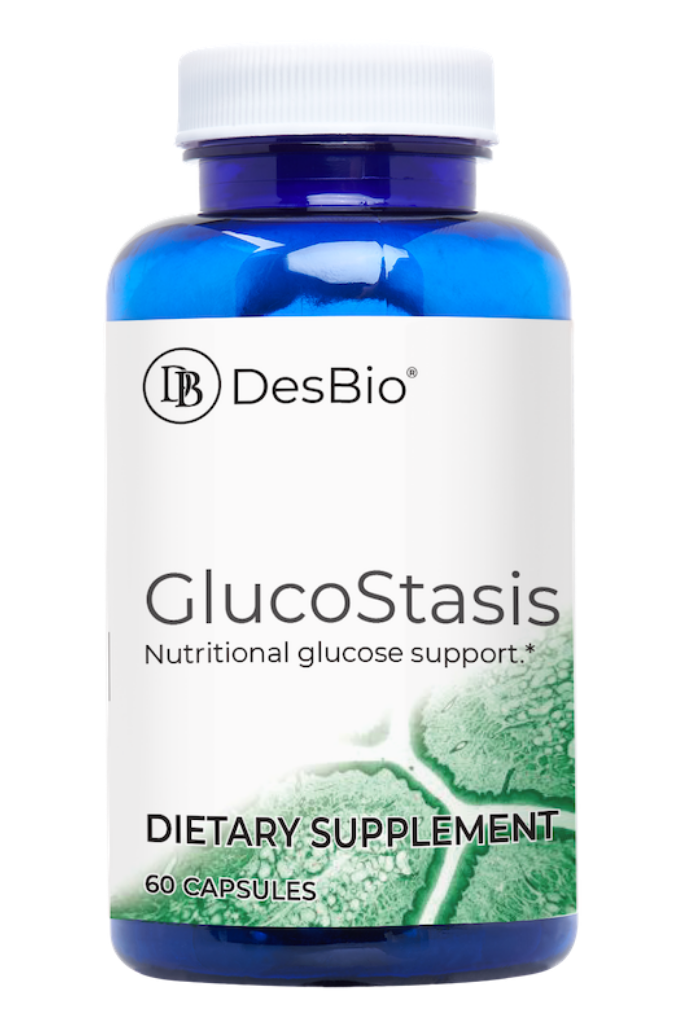
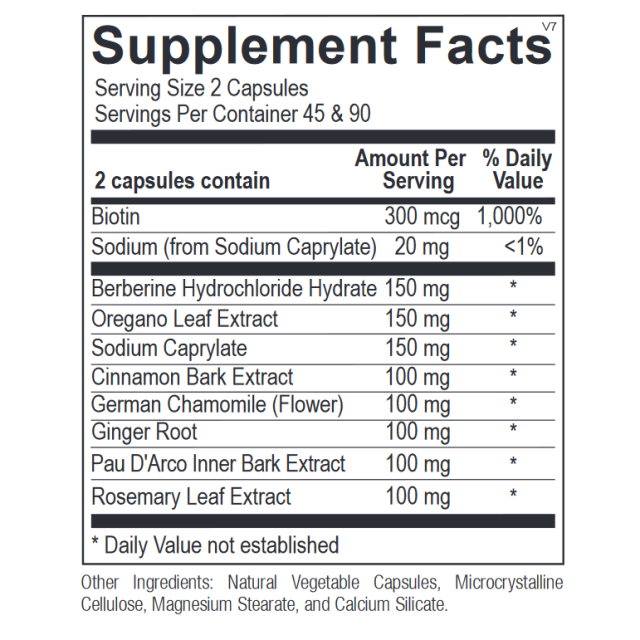
- Biotin (750 mcg)
- Chromium (as picolinate) (750 mcg)
- Berberine HCI (500 mg)
- Gymnema Sylvestre leaf ext. (25% Gymnemic acids) (200 mg)
- Bitter Melon Fruit Powder (Momordica Charantia) (150 mg)
- Fenugreek Seed Powder (Trigonella Foenum-Graecum) (150 mg)
- Cinnamon Bark (Cinnamomi Burmanii) Ext. (Cinnulin PF) (75 mg)
- Alpha Lipoic Acid (75 mg)
As a dietary supplement, take 2 capsules daily or as directed by your healthcare provider. Dose may be divided.
Paired well with GlucoReg
Description
GlucoStasis combines essential nutrients, botanicals, and antioxidants to support balanced blood sugar levels. The ingredients in GlucoStasis work to encourage healthy insulin production and glucose utilization at the cellular level.
GlucoStasis
GlucoStasis combines essential nutrients, botanicals, and antioxidants to support balanced blood sugar levels. The ingredients in GlucoStasis work to encourage healthy insulin production and glucose utilization at the cellular level.
Why GlucoStasis?
The population affected by insulin insensitivity and type 2 diabetes has grown to a staggering 350 million world wide.1 Though lifestyle is key for management of diabetes, many patients are disheartened when they are told that dependence on prescription drugs may be inevitable if they cannot control their blood sugar. Fortunately, nature offers us nutrients and botanicals that when used in conjunction with a healthy lifestyle can help support blood sugar management.
When combined with the correct diet and exercise, GlucoStasis can support healthy blood sugar and insulin levels within a normal range.
Blood Sugar Balance
Type 2 diabetes or insulin resistance is classified by adequate pancreatic output of insulin with insufficient uptake of insulin and blood sugar by cells. It is often paired with other common symptoms of metabolic disorders, including visceral weight gain, low activity level, and elevated cardiovascular risk markers. Diabetes is also the most common reason for blindness, non-traumatic amputation, and kidney failure in US adults.
GlucoStasis combines essential nutrients, botanicals, and antioxidants to support balanced blood sugar levels. The ingredients in GlucoStasis work to encourage healthy insulin production within the normal levels and glucose utilization at the cellular level.
Berberine has been shown to improve glucose tolerance both in vitro and in vivo. In a review published in the May 2008 edition of Metabolism, two studies of berberine demonstrated benefits in supporting blood sugar metabolism. In the first study, which evaluated 36 adults newly diagnosed with diabetes, berberine was shown to be comparable to metformin in supporting blood sugar and insulin metabolism. In these subjects, oral berberine provided significant benefits on fasting blood glucose, hemoglobin A1C, plasma triglycerides, and post-prandial blood glucose. In the second evaluation, 48 subjects with poorly controlled DM2 showed improvements in fasting blood glucose, type 2 diabetes, fasting plasma insulin, total cholesterol, and triglycerides when supplemented with berberine for 3 months.2 Another way that berberine may aid in metabolic syndrome patients is by influencing gastrointestinal microbiota. Recent research has indicated that the bacterial population of obese and diabetic patients may create low-grade inflammation which stimulates the disease state. Some researchers theorize that berberine helps to modulate the gut microflora in these patients which may have indirect anti-diabetic effects.3,4
Fenugreek (Trigonella foenum-graecum) is a widely used herb with both culinary and medicinal uses. It has been found to lower the blood sugar level in the body and increase the tolerance of glucose. In a double-blind placebo-controlled study of mildly diabetic patients, subjects receiving fenugreek showed improvement in glucose control as well as a decrease in serum triglycerides and an increase in HDL cholesterol.5
Bitter Melon (Mormordica) has been a component of traditional Chinese medicine for centuries and is actively used in the support of patients with insulin insensitivity. Exercise is typically recommended in patients experiencing insulin insensitivity because activity stimulates production of the endogenous enzyme AMPK (adenosine monophosphate-activated protein kinase). This compound has been shown to help move glucose transporters to the surface of cells where they can take the sugar out of the blood. Recent studies have shown that bitter melon has an effect similar to exercise on AMPK, thus possibly explaining bitter melon’s use in the treatment of metabolic disorders.6
Gymnema leaf extract (gymnema sylvestre) provides wide-spread benefits on blood sugar metabolism. First, gymnema helps to control the effects of dietary carbohydrates by reducing the taste buds’ sensitivity to sweetness—an effect believed to occur via blockage of taste buds on the tongue and by reducing glucose absorption in the small intestine.7 Gymnema also supports the growth and replication of pancreatic beta cells, therefore encouraging healthy endogenous insulin production.8
Cinnamon contains extracts for Type-A polymers, the compounds shown in clinical research to have positive effects on metabolic syndrome. Type-A polymers from cinnamon appear to support glucose/insulin signaling pathways for improved blood sugar metabolism. In a study of pre-diabetic and metabolic syndrome patients, 83% of those given the active Type-A polymers experienced a decrease in fasting blood sugar (about an 8% drop), compared to only 33% in the placebo group. Moreover, subjects showed statistically lower body fat, enhanced lean body mass, and lower systolic blood pressure. Subjects also saw improvement in various antioxidant measures.9
Chromium is an essential trace mineral that may directly impact insulin sensitivity. Chromium is a component of glucose tolerance factor, a transporter that carries glucose into the cell.
Biotin is an essential B-vitamin that plays a role in the health of the skin, nerve, digestive tract, and metabolism. Biotin influences glucose metabolism and levels tend to be lower in patients with Type 2 diabetes.10


Reviews
There are no reviews yet.